
Preconditioning and Aeration solutions
SOLSTEO designs preconditioning and aeration solutions that support two essential phases of every EO sterilization cycle.
Before sterilization, preconditioning prepares products for EO exposure.
After sterilization, aeration removes residual EO after sterilization.
Why are preconditioning and aeration essential in EO sterilization?
Preconditioning: for better sterilization performance
Temperature is one of the most critical parameters in EO sterilization, and humidity is essential to process efficiency. The preconditioning phase brings the entire product load to uniform temperature and humidity levels, ensuring homogeneous sterilization throughout the whole batch.
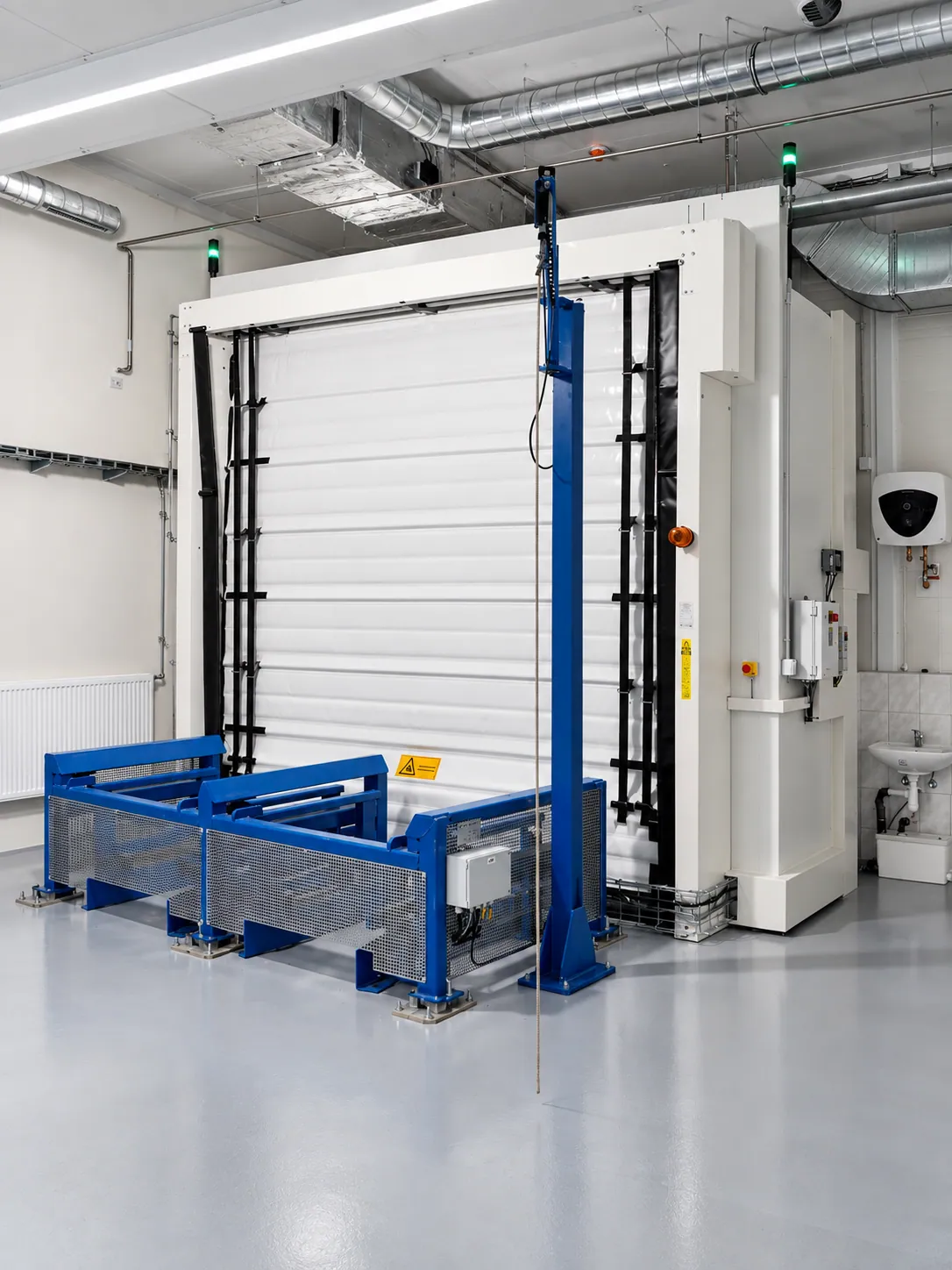
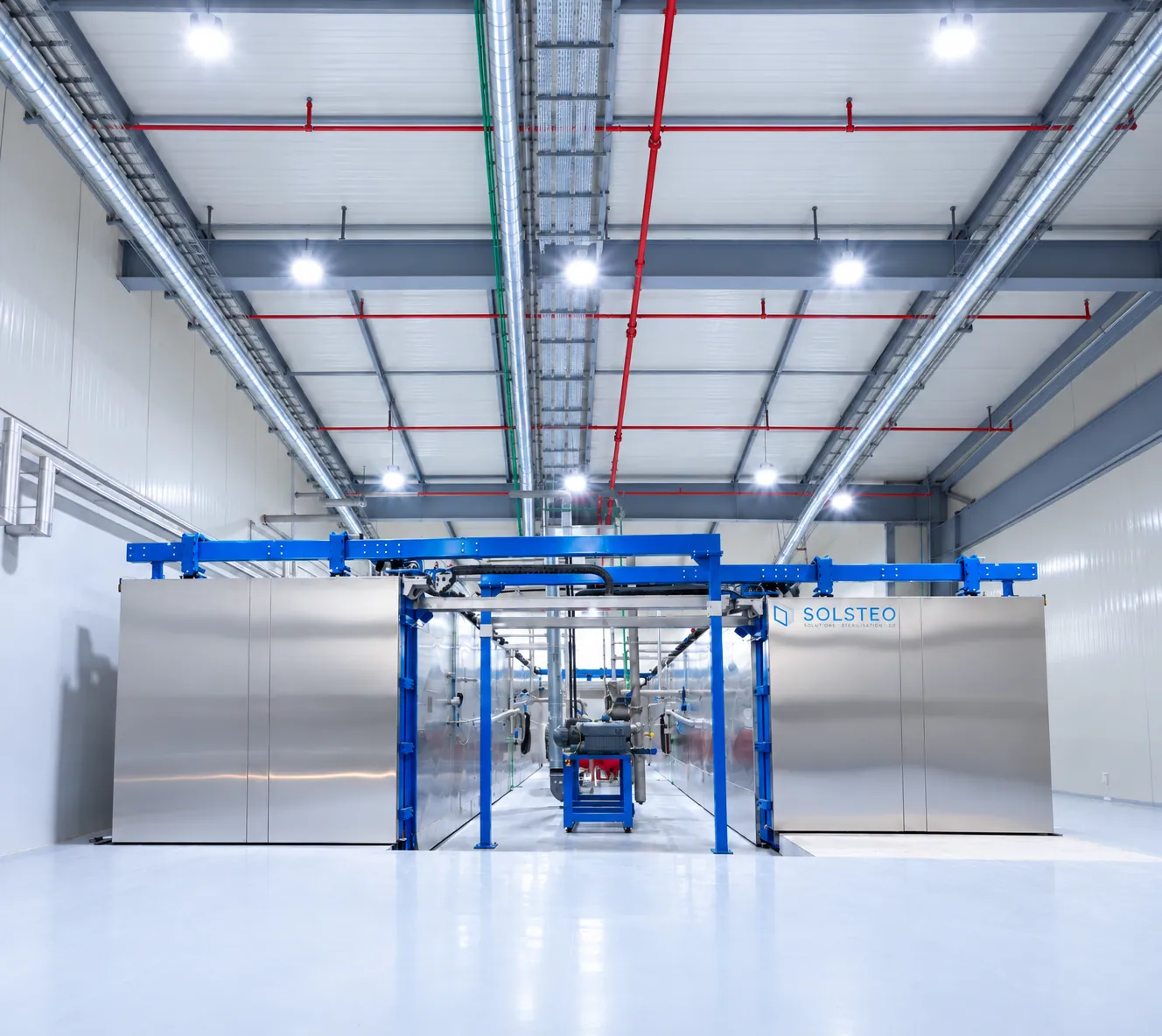
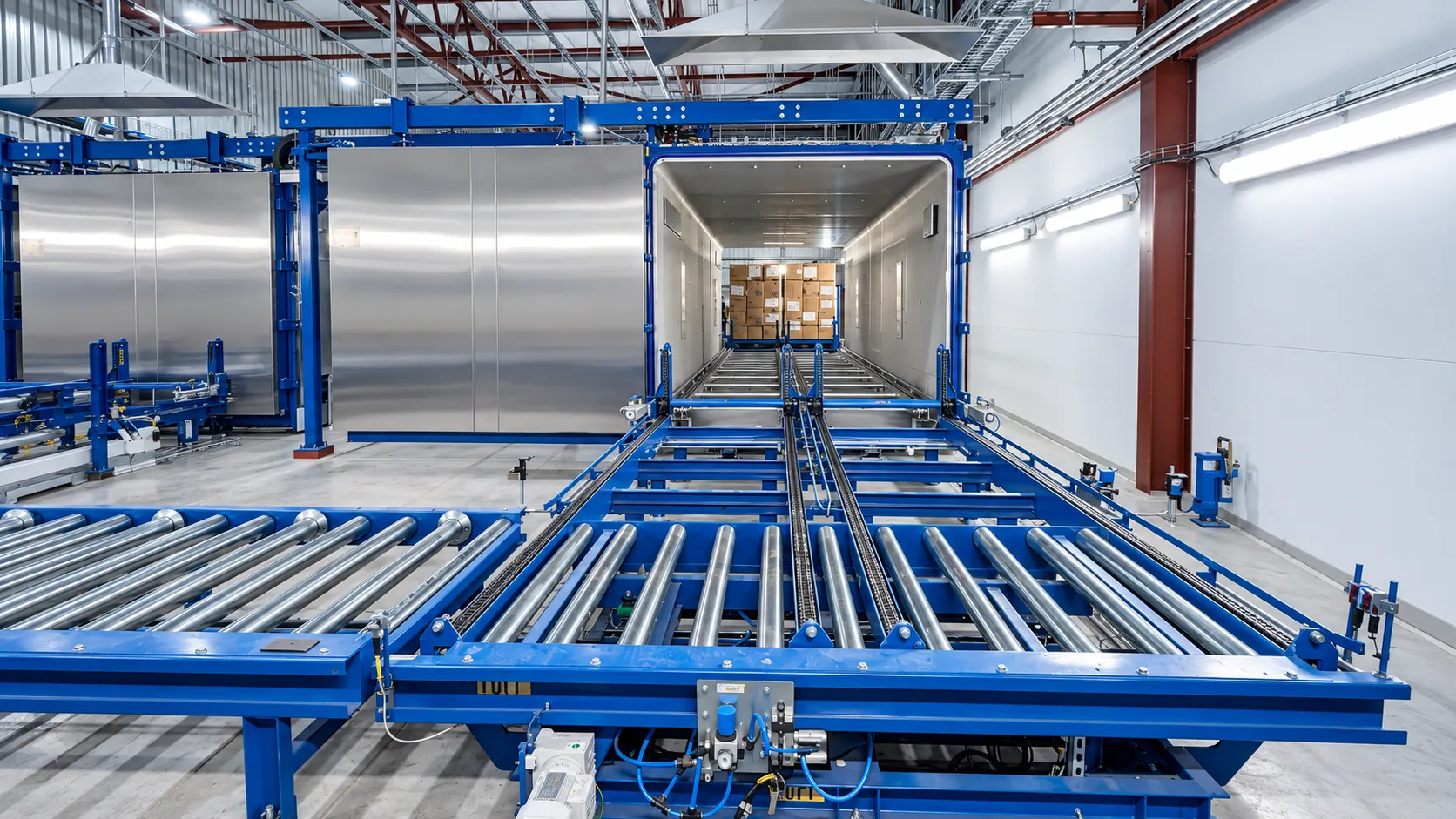
© SOLSTEO, Preconditioning room, Europe
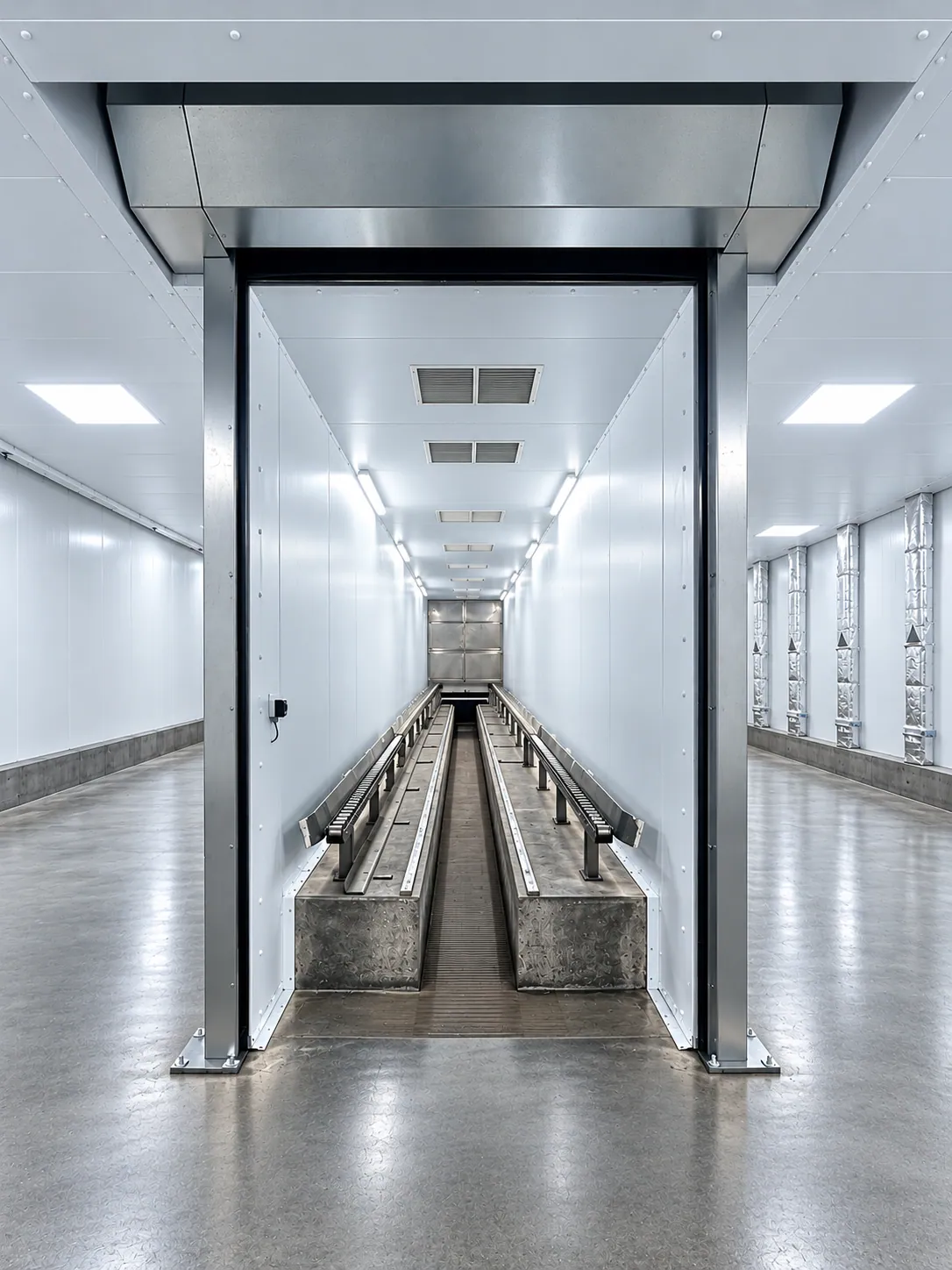
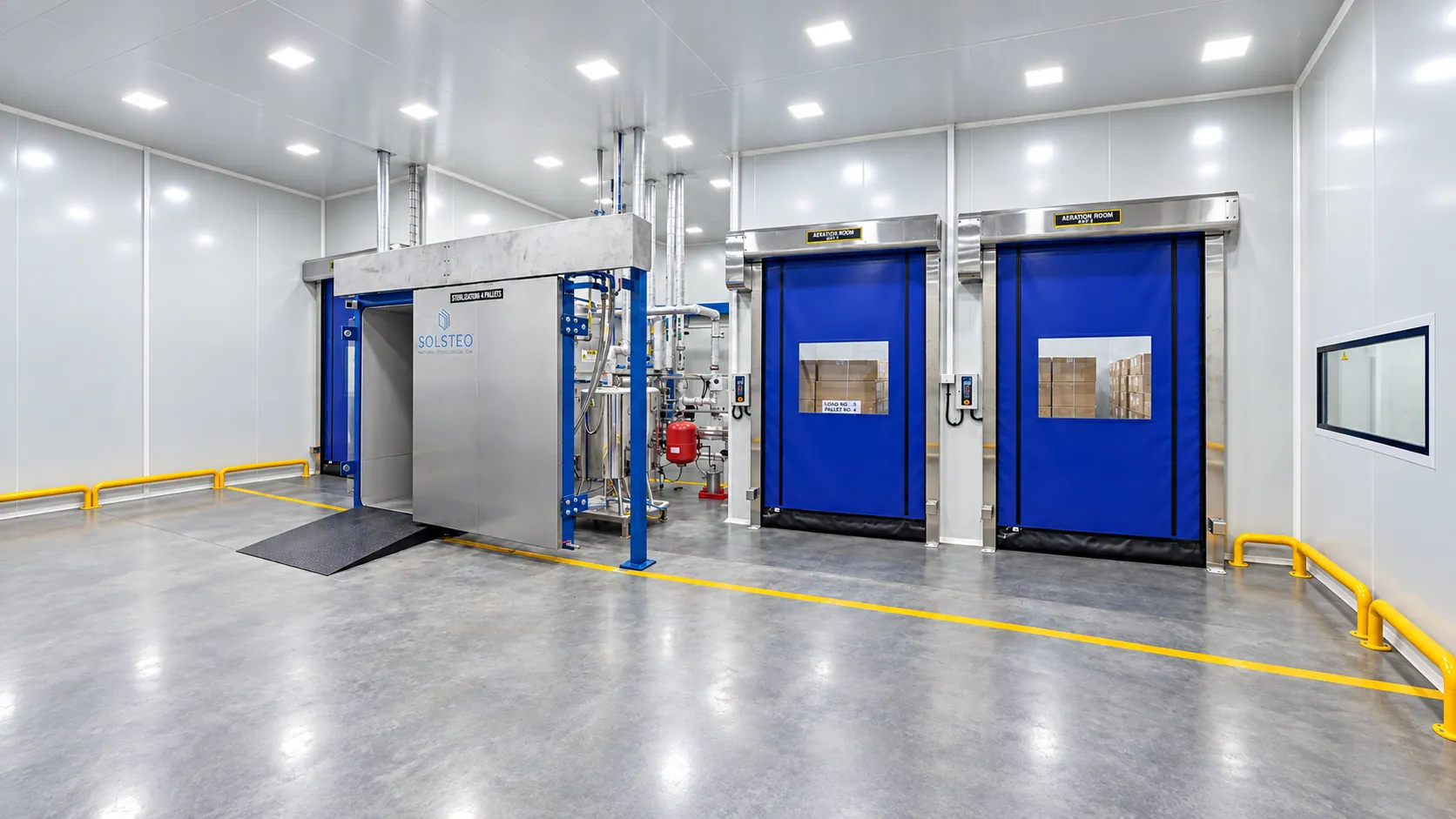
© SOLSTEO, Aeration room, Europe
Aeration: for safe EO desorption
During sterilization, some of the EO gas is absorbed by the device materials and remains trapped. This residual gas may partially react to form Ethylene Chlorohydrin (ECH) upon contact with chloride ions and Ethylene Glycol (ETG) upon contact with moisture.
The purpose of the aeration phase is therefore to reduce the residues of these three substances (EO, ECH and ETG) below the allowable limits defined by ISO 10993-7.
In practice, aeration uses controlled vacuum and air-rinsing phases to accelerate residue removal before batch release. This phase can last from a few hours to several days, depending on the products and the load configuration.
Two SOLSTEO approaches for Preconditioning & Aeration
SOLSTEO offers two different approaches to perform these critical process steps:
- Dedicated rooms where preconditioning and aeration phases are performed separately
- UNICYCLE® technology where preconditioning, sterilization and aeration steps are all performed inside the sterilizer chamber
Dedicated Preconditioning & Aeration Rooms
Dedicated preconditioning and aeration rooms are controlled environments integrated upstream and downstream of an EO sterilizer. Both rooms run at slightly negative pressure (just below atm. pressure) with adjusted heating/moistening/ventilation systems.
By preparing the load before it enters the sterilizer, the preconditioning room reduces the time required before EO injection can begin. After sterilization, the aeration room allows loads to leave the chamber immediately following the safety rinsing steps, freeing the sterilizer for the next cycle.
They are designed for facilities that need to maximize sterilization capacity and process large production volumes.
As an alternative to conventional EO sterilization facilities with dedicated preconditioning and aeration rooms, SOLSTEO has developed UNICYCLE®, an integrated technology that performs product conditioning, sterilization and aeration directly inside the sterilizer chamber.
UNICYCLE® enables the implementation of a compact in-house EO sterilization solution. This technology reduces investment costs, infrastructure requirements and product handling. This integrated approach typically allows facilities to complete one full sterilization cycle per day.
UNICYCLE® technology is available across selected SOLSTEO sterilizer ranges, including SOLIX® and UNISTE®.
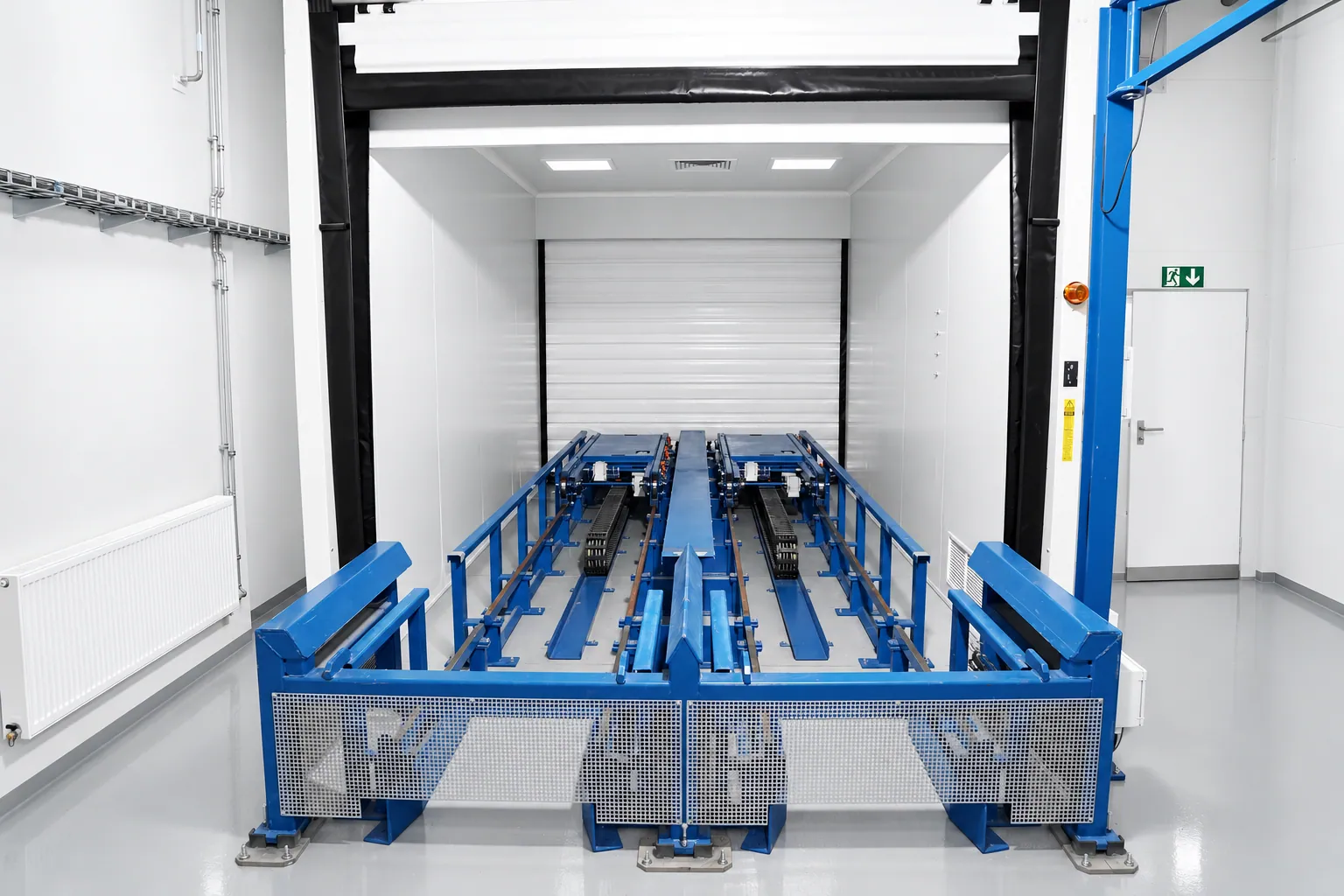
© SOLSTEO, Aeration room, Europe
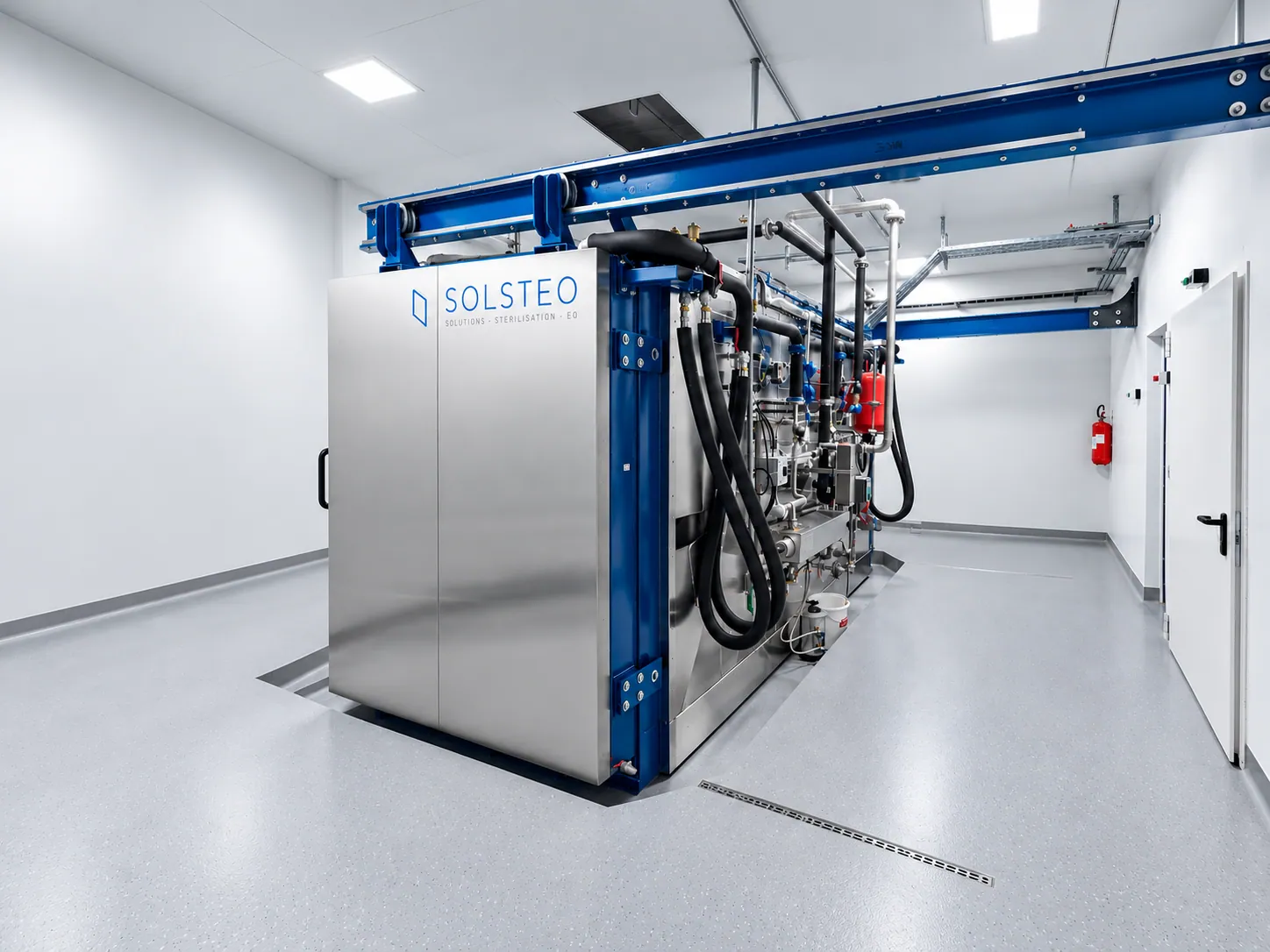
© SOLSTEO, UNISTE, Pays
How to choose between Dedicated Rooms and UNICYCLE®?
Depending on production volume, facility layout and investment strategy, SOLSTEO can implement preconditioning and aeration either in dedicated rooms or directly inside the sterilizer chamber with UNICYCLE® technology. Below are some considerations that can help you assess your needs:
| Criterion | Dedicated Preconditioning & Aeration Rooms | UNICYCLE® Technology |
|---|---|---|
| Process architecture | Requires large floor surface / factory footprint | Compact solution |
| Best suited for | High-volume production facilities Maximum sterilizer utilization | Facilities with moderate production volumes Ideal for first in-house EO projects |
| Production capacity | Up to 3 cycles per day | Typically, 1 cycle per day |
| Investment level | Higher | Lower |
| Scalability | High daily throughput from the start | Can evolve later by adding dedicated preconditioning and aeration rooms |