
Industrial Ethylene Oxide gas abatement systems: EO scrubbers
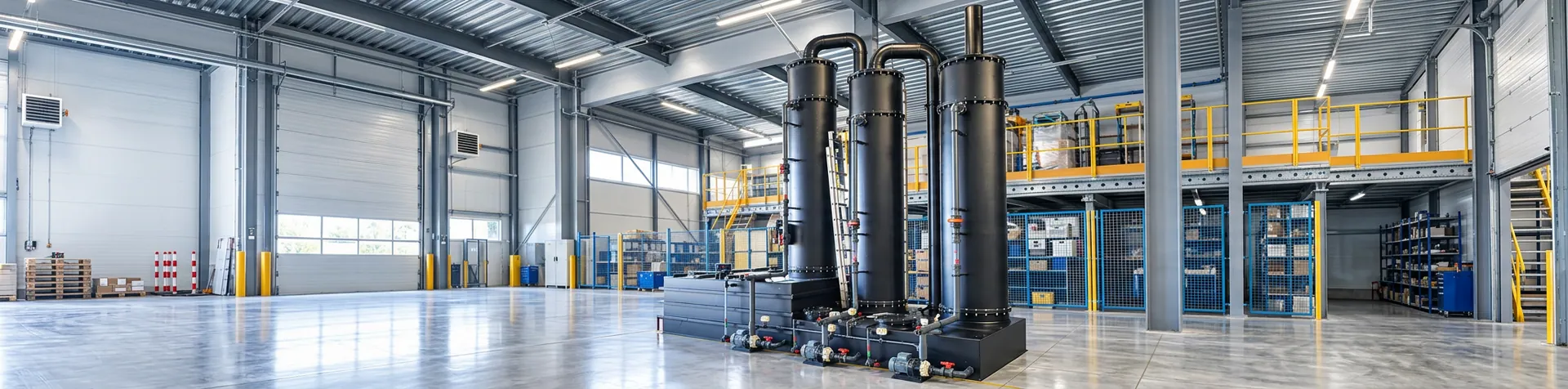
SOLSTEO offers next-generation EO scrubbers designed to deliver reliable and cost-effective EO abatement systems. Combining operational simplicity with high treatment efficiency, scrubbers are a proven solution for EO treatment in sterilization facilities.
How do industrial scrubbers work?Chemical conversion of EO in an acidic solution
Industrial scrubbers rely on a chemical process that is widely used in many industries. A chemical reaction is triggered when ethylene oxide comes into contact with an acidic aqueous solution: EO is converted to ethylene glycol (ETG). The ethylene glycol remains in the treatment solution, while the purified air is discharged into the atmosphere.
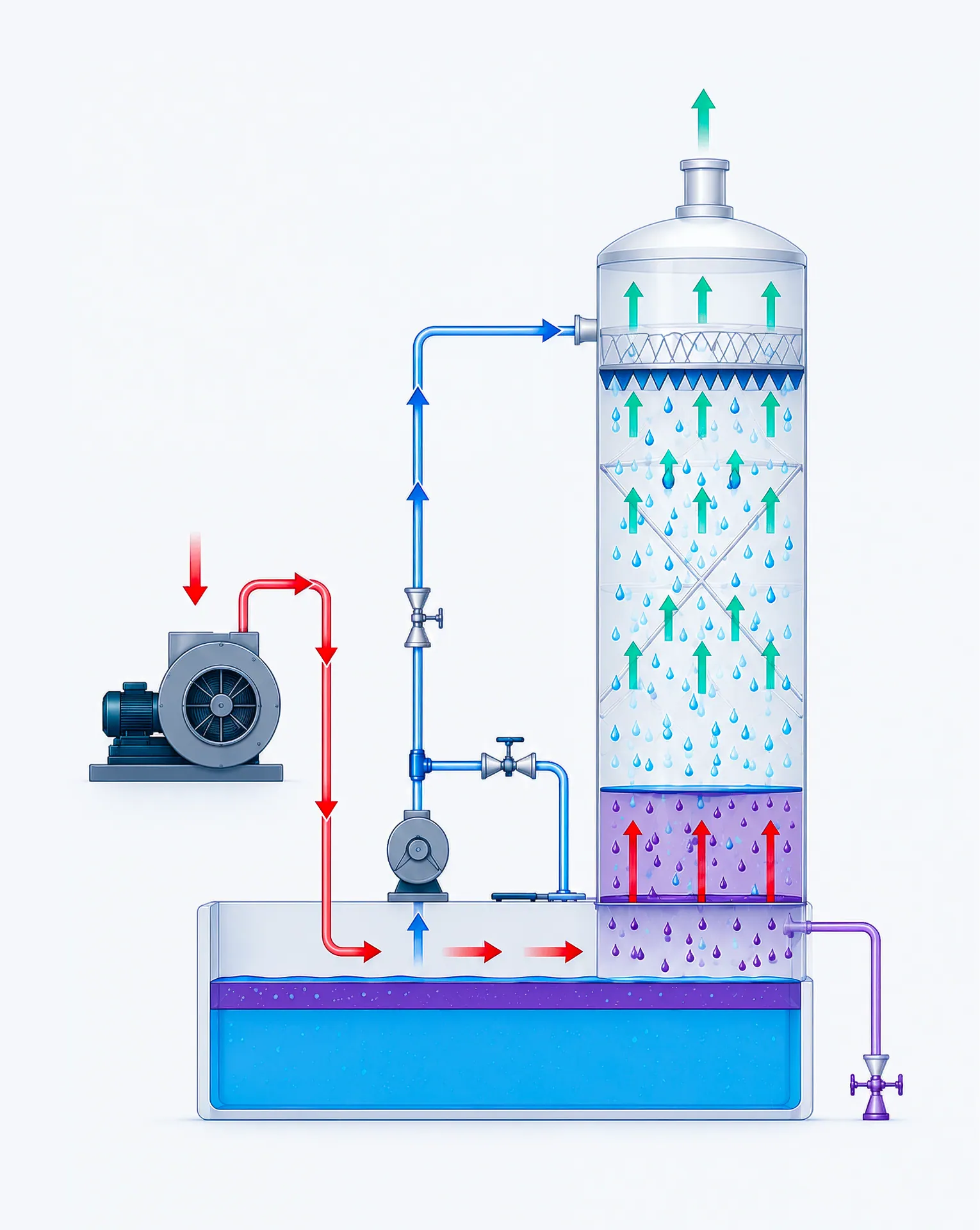
Capture of EO-contaminated airflow
Contact with acidic scrubbing solution
Conversion of EO into ethylene glycol
Safe discharge of treated air
Why choose a SOLSTEO EO scrubber?
SOLSTEO next-generation EO scrubbers provide a simple, reliable and cost-effective solution for ethylene oxide emissions treatment. Our scrubbers are all sized according to the flow rate and EO concentration of the inlet gas.
High EO abatement performance
Achieves EO abatement efficiencies from 98% to 99.99%, depending on operating conditions and process configuration.
Ideal for small & medium size factories
Ideally suited to sterilization facilities with moderate production volumes, scrubbers are particularly effective for high EO concentrations (e.g. vacuum pump outlet). For large airflow volumes with very low EO concentrations (such as aeration rooms), specific adaptations may be required, or catalytic oxidizers may offer a more suitable solution.
Excellent cost-to-performance ratio
Proven EO treatment technology offering an attractive balance between treatment efficiency, investment cost and operating expenses.
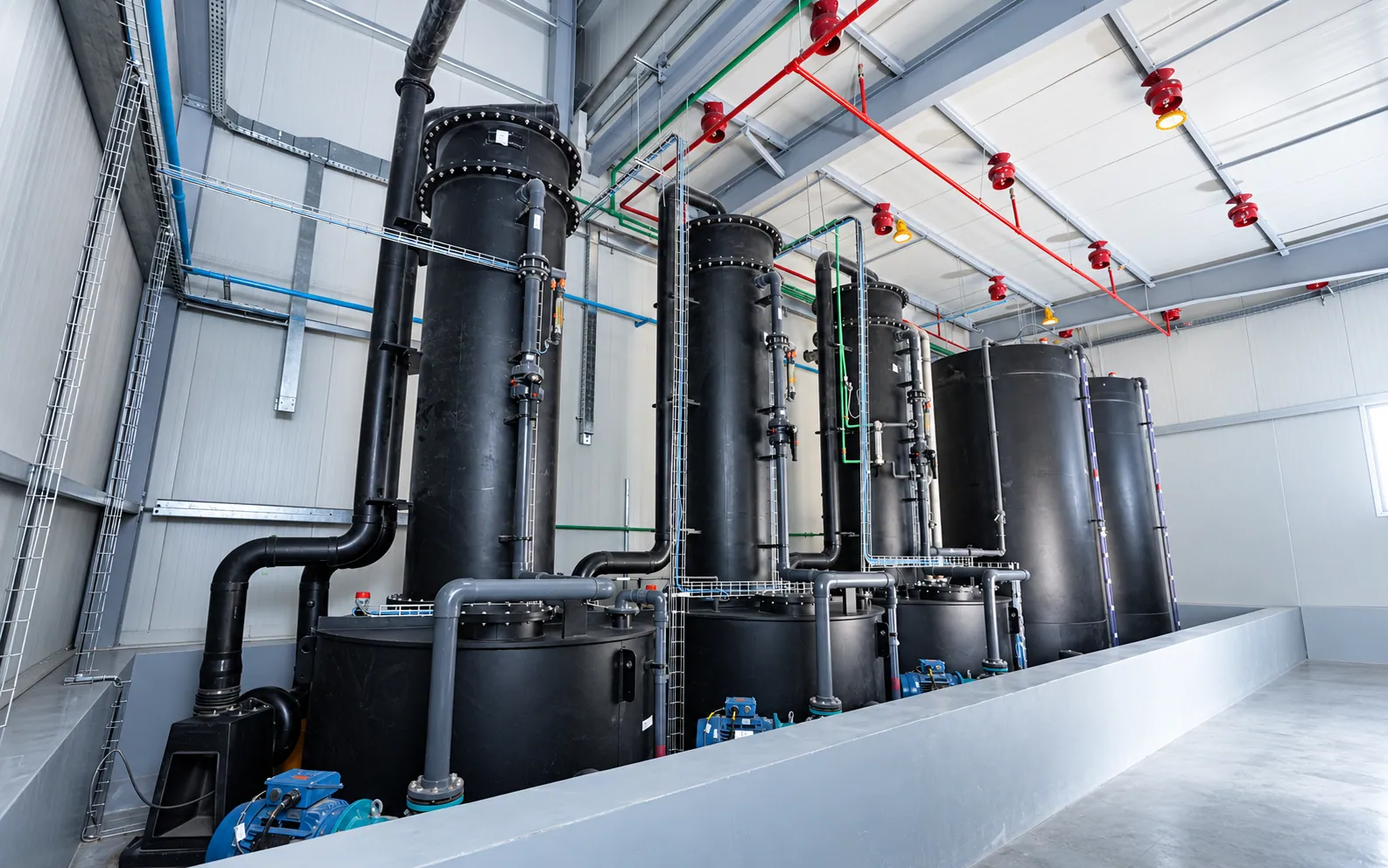
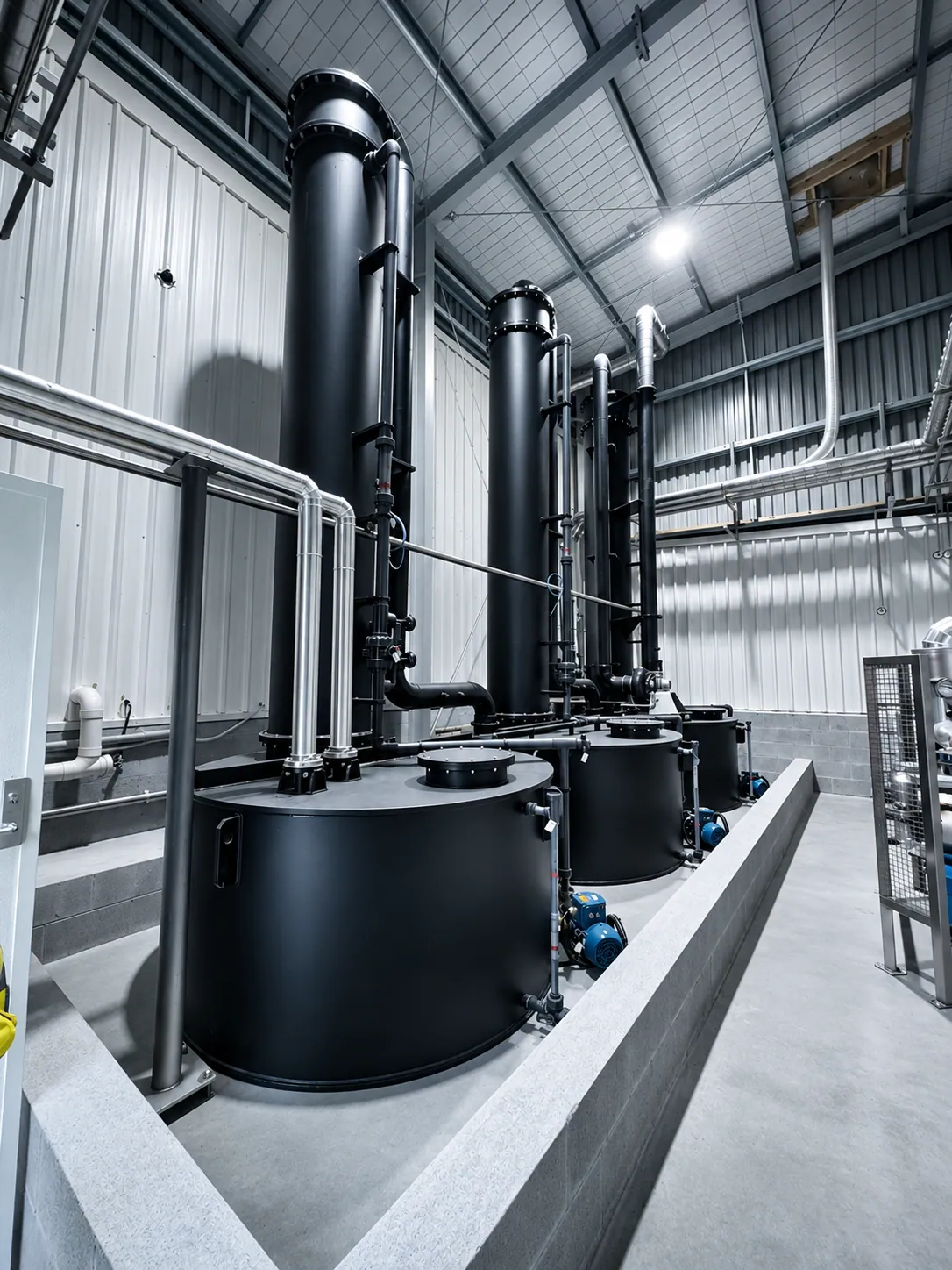
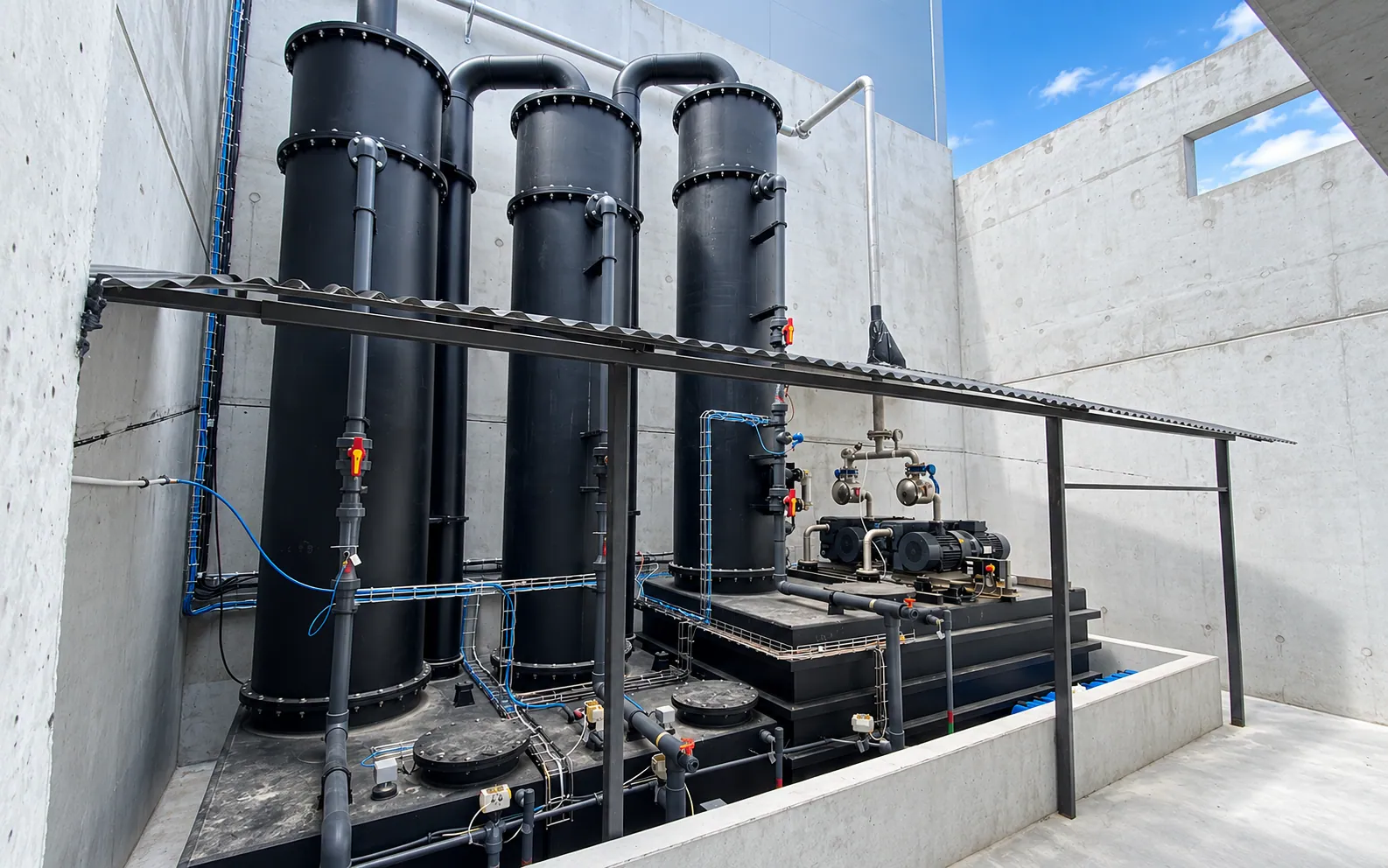
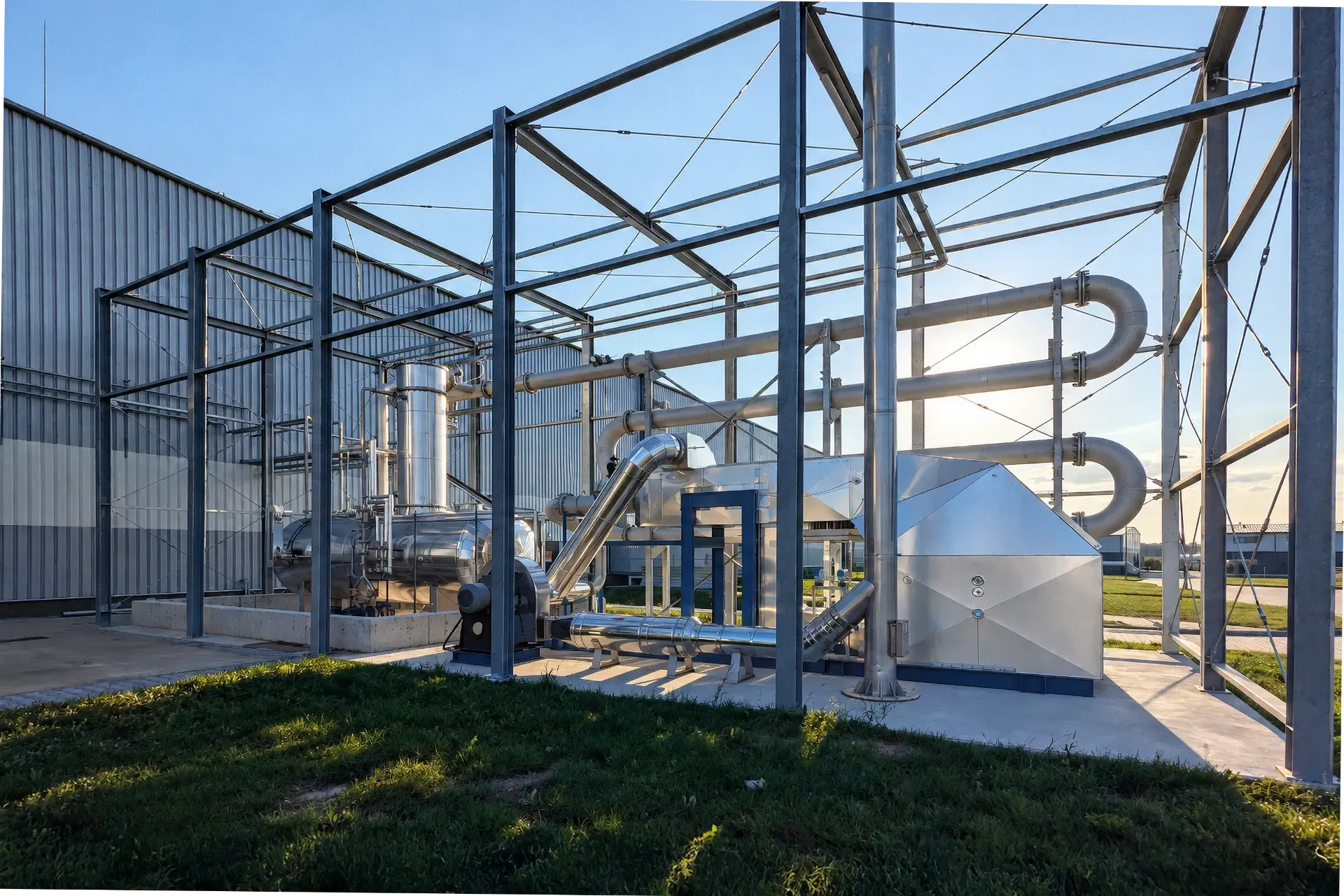
© SOLSTEO, Scrubber, Middle East
Frequently Asked Questions about Scrubbers
What are the differences between a scrubber and a catalytic oxidizer?
| Technical information | Scrubber | Catalytic oxidizer |
|---|---|---|
| Airflow from vacuum pumps | Yes | Yes |
| Airflow from aeration rooms | No (except small flow) | Yes |
| Operation | Intermittent or permanent (easy to start/stop) | Permanent with continuous controlled EO inlet flow |
| Efficiency | Depends on the number of processing stages. Single column: EO peaks during first EO evacuation. High-efficiency multi-stages process @ <1ppm | Very high efficiency <1ppm to 0.1ppm |
| By-product | Ethylene Glycol (chemical reaction of EO in acid water) | CO₂, H₂O |
| Media replacement | Replace water-acid-glycol media when saturated (every 6 to 12 months). Must be disposed of as industrial waste. Refill system with fresh mix of water and sulfuric acid. | Replace catalytic bed every 5 to 7 years depending on usage. |
| Energy required | Electricity. No significant power supply required. | Electricity or gas for initial heating. Auto-thermal operation in optimal processing conditions. |