

Compliance & Safety for EO sterilization facilities
One of SOLSTEO’s core areas of expertise is the complete mastery of the regulations and standards governing EO sterilization, from the design of EO sterilizers to the release of sterile medical devices onto the market, and ensuring the safety of the personnel.
Why do so many regulations and standards govern industrial ethylene oxide (EO) sterilization?
While ethylene oxide is certainly a hazardous gas, it is above all an irreplaceable sterilizing agent for many medical devices. This creates a constant tension between benefits and risks, a balance that regulations aim to manage rather than simply prohibiting the use of this gas.
Different risks, different stakeholders
Discover moreDifferent risks, different stakeholders
Regulations address the specific risks faced by medical device manufacturers, EO sterilizer manufacturers, site operators, exposed workers and nearby residents.
Why so many requirements?
Discover moreWhy so many requirements?
EO is both effective and hazardous, resulting in a denser regulatory framework than other sterilization methods such as steam or radiation.
Mandatory legislation
Discover moreMandatory legislation
European directives and regulations (ATEX, Machinery, PED, MDR) are legally binding and enforced through CE marking.
Voluntary standards, practical expectations
Discover moreVoluntary standards, practical expectations
International standards (ISO 11135, ISO 10993-7) and European standards (EN 1422, EN 60079 series) are, in principle, voluntary; however, they offer a presumption of conformity and are, in practice, required by notified bodies and auditors.
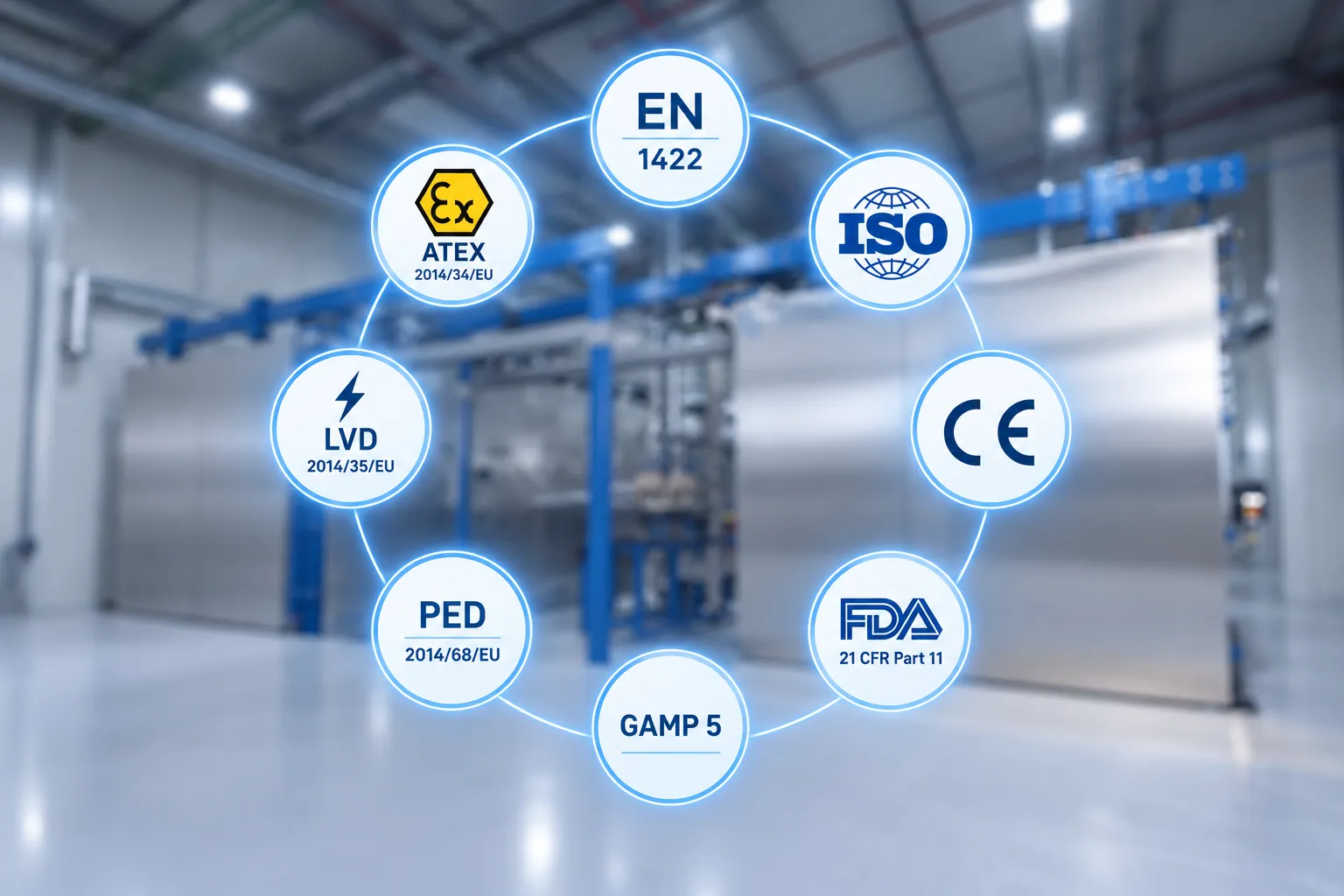
Main Standards & Regulations for EO Sterilization
EN 1422
Specifies design and performance requirements and test methods for automatically controlled ethylene oxide sterilizers used in the medical sector. It is the reference standard for the sterilization equipment itself, as opposed to the sterilization process, which is covered by ISO 11135.
ATEX Directive 2014/34/EU
Intended for equipment manufacturers. It covers equipment and protective systems intended for use in explosive atmospheres. It defines the essential health and safety requirements as well as the conformity assessment procedures to be applied before placing products on the EU market.
Supporting ATEX standards
The EN IEC 60079 and EN ISO 80079 families of standards cover explosion protection of electrical and non-electrical equipment, as well as area classification, selection, installation, inspection and repair. They can be used to give a presumption of conformity to ATEX directives.
Regulation (EU) 2023/1230 – Machinery
Intended for machine manufacturers. It covers machinery and related products. It sets out the essential health and safety requirements and the conformity assessment procedures to apply before placing them on the EU market. It replaces Directive 2006/42/EC from 20 January 2027.
Low Voltage Directive 2014/35/EU
Intended for manufacturers of electrical equipment. It covers electrical equipment designed for use with a voltage rating between 50 and 1000 V AC or between 75 and 1500 V DC. It sets out the safety objectives that the equipment must meet and the conformity assessment procedure to apply before placing it on the EU market. That procedure is internal production control, with no notified body involved.
Pressure Equipment Directive (PED) 2014/68/EU
Intended for manufacturers of pressure equipment. It covers pressure equipment and assemblies with a maximum allowable pressure above 0.5 bar: vessels, piping, safety accessories and pressure accessories. It sets out the essential safety requirements and the conformity assessment procedures to apply before placing them on the EU market. Equipment is classified into categories I to IV according to the hazard. From category II upwards, a notified body must be involved.
GAMP 5
Intended for pharmaceutical and life-science companies and their system suppliers. It is an industry guide, not a regulation. It gives a risk-based approach to validating computerized systems used in GxP environments, through specification, verification and supplier involvement across the system life cycle. It supports compliance with regulatory requirements such as EU GMP Annex 11 and FDA 21 CFR Part 11.
FDA 21CFR Part 11
Intended for companies regulated by the US FDA and the suppliers of their computerized systems. It covers electronic records and electronic signatures used to meet FDA predicate rules, such as GMP and GLP. It sets the requirements for these records and signatures to be considered trustworthy, reliable and equivalent to paper records and handwritten signatures. These requirements include system validation, audit trails, access controls and signature controls.
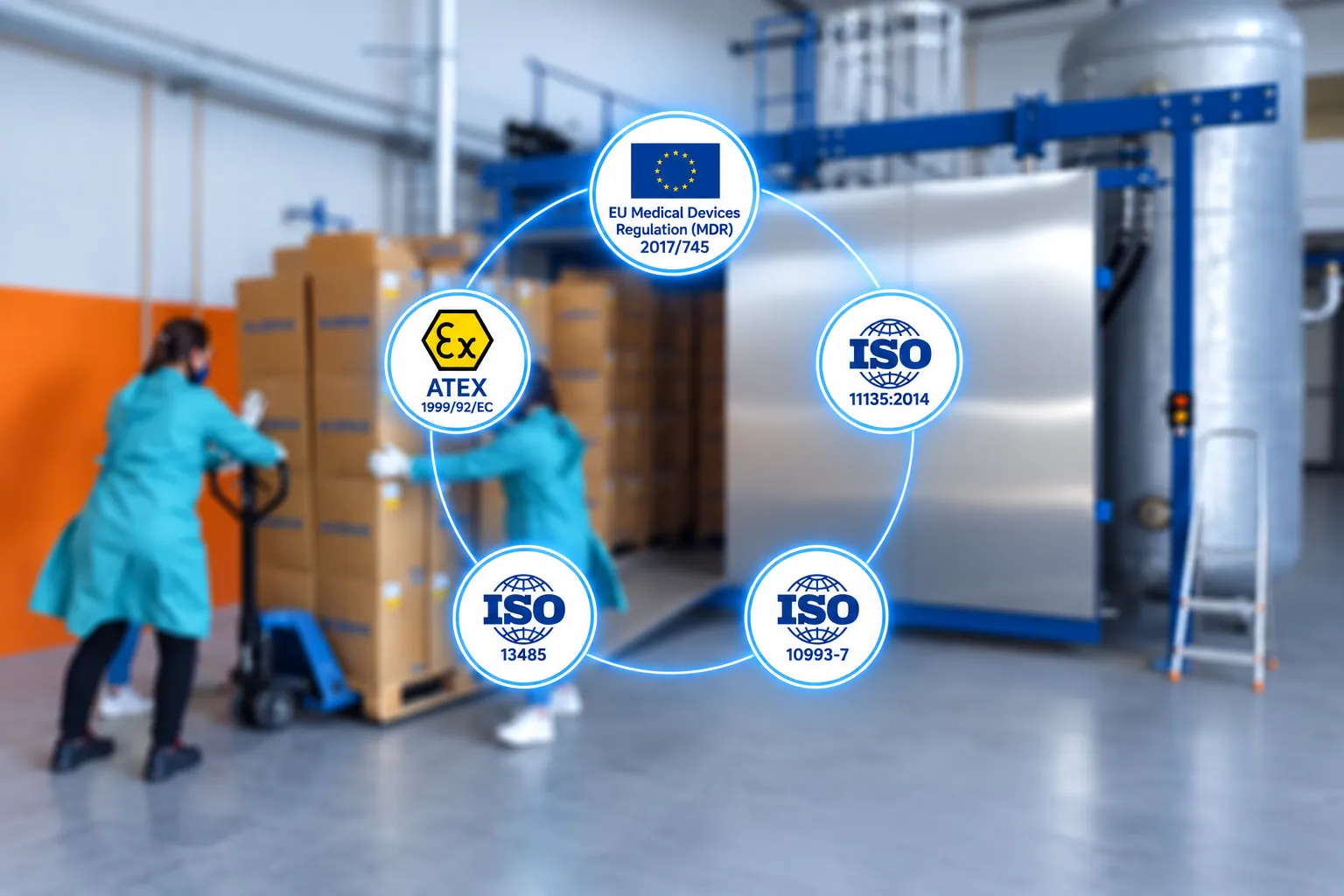
EU Medical Devices Regulation (MDR) 2017/745
The overarching legal framework for placing medical devices on the EU market. Sterilization is a critical process whose validation must be documented in the device’s technical file, following the standards listed below.
ATEX Directive 1999/92/EC
Intended for users. It sets the minimum requirements for improving the safety and health protection of workers potentially exposed to the risk of explosive atmospheres, complementing manufacturers' responsibilities by defining those of employers. Operators must classify hazardous zones, assess explosion risks, train workers, and ensure the compliance of all installed equipment. It includes the internal procedures, maintenance procedures of equipment, training, and Explosion Protection Document (EPD).
ISO 11135:2014
Covers the sterilization process itself. This standard sets the requirements for the development, validation, and routine control of the EO sterilization process. It establishes a structured approach for defining sterilization cycle parameters, equipment qualification, and product-specific considerations.
ISO 10993-7
Sets the allowable limits for ethylene oxide and ethylene chlorohydrin residuals on sterilized devices, and the methods to determine them. It directly drives aeration times and therefore the design of sterilizer cycles and aeration rooms.
ISO 13485
It establishes the quality management system for medical device manufacturers that governs documentary control of the process, including change management and CAPA.
SOLSTEO’s commitment: safety and compliance at the heart of every machine
With over 20 years of expertise in the design and manufacture of ethylene oxide sterilizers, SOLSTEO places compliance with current European and international (ISO) standards at the heart of its technical development strategy. As recognized experts in ATEX directives and INERIS-certified trainers, we also provide our clients with the essential safety guidelines for operating their facilities.
Compliance, from the standards committee to the machine
- ISO 11135: SOLSTEO is an active member of ISO/TC 198/WG 1, the working group that drafts and revises the standard. SOLSTEO is directly involved in the works to edit the next version.
- EN1422: Under CEN/TC 102/WG 6, SOLSTEO contributes to the revision of this standard, which governs the design and construction of EO sterilizers, their expected performance, the methods used to verify that performance (acceptance tests / FAT), and the safety aspects of the machine
Safety at every level
- SOLSTEO provides its clients with full expertise in the management of industrial risks related to EO use. We are regularly invited to join our clients’ working groups performing HAZOP or other types of risk analysis.
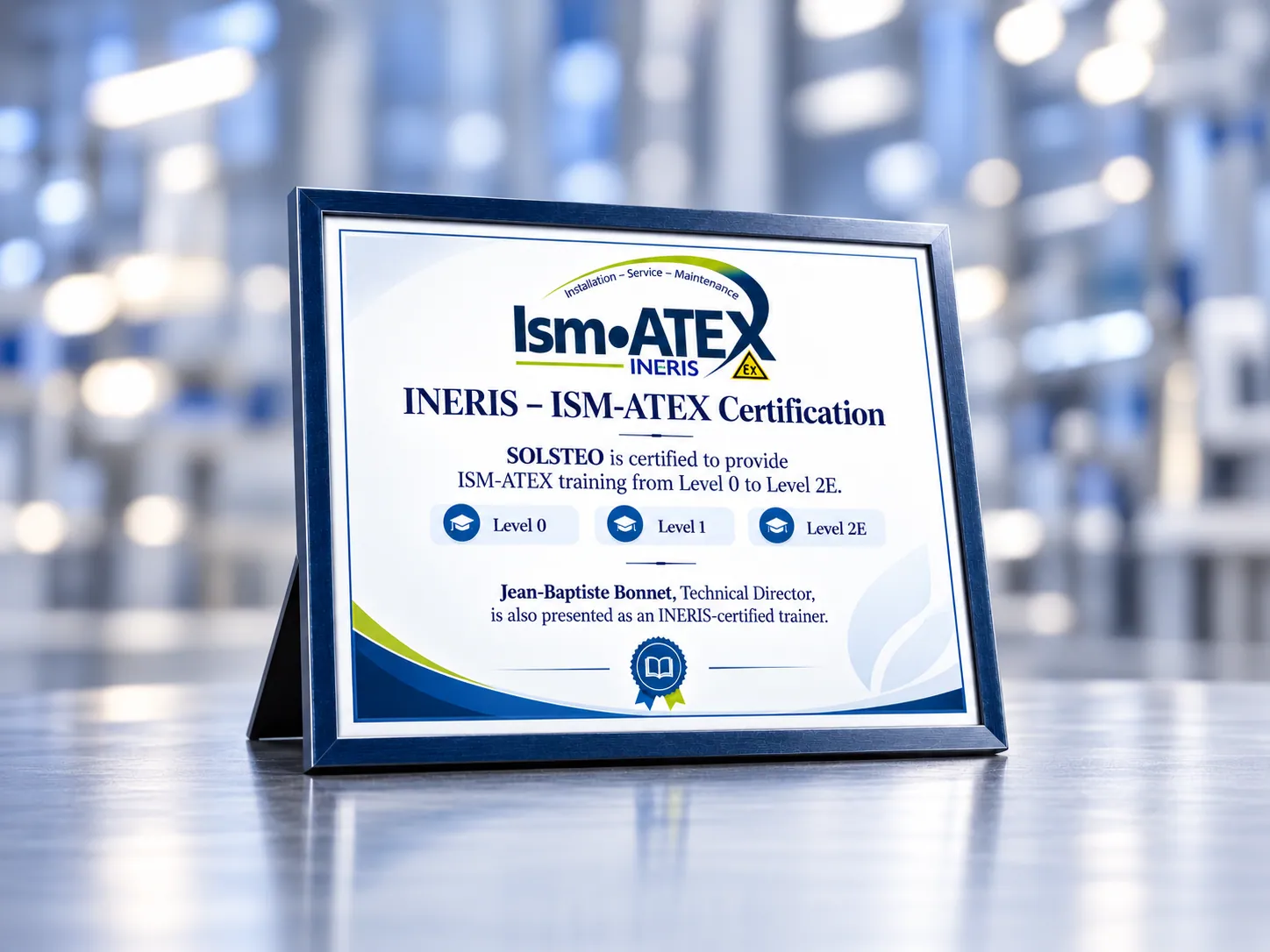
- We are experts in the European ATEX Directives. SOLSTEO can perform ATEX zones definition for sites that have not yet done so. We perform ATEX-compliance audits of existing installations. We also deliver specific ISM-ATEX trainings (Installation, Services, Maintenance). We hold a certification issued by INERIS (the French National Institute for Industrial Environment and Risks) authorizing us to provide training up to level 2E/M.
Process reliability and repeatability
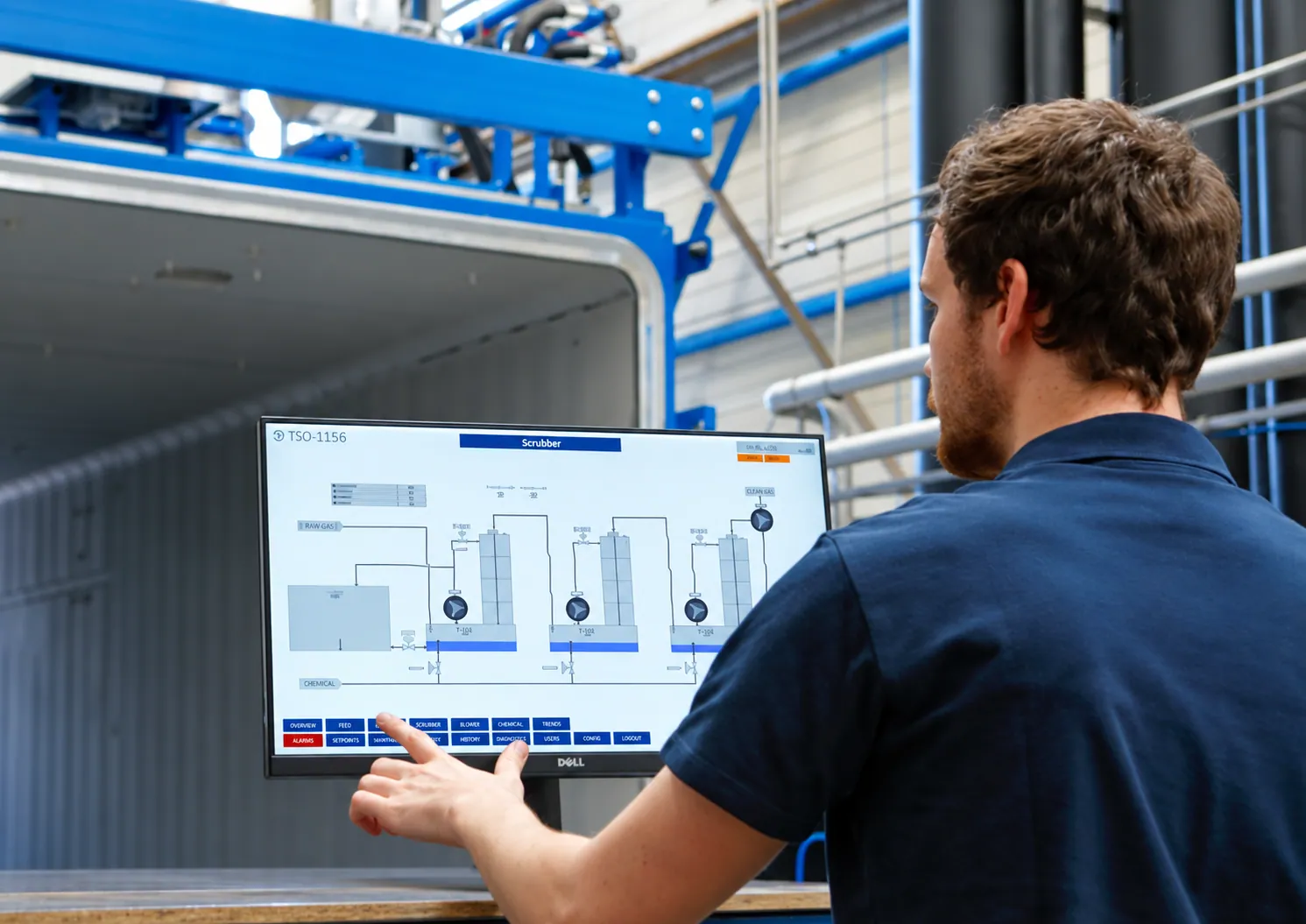
SOLSTEO’s software package CRISTAL CONNECT is the most reliable solution in Europe, offering full traceability of the process at all times, with a complete audit trail and fail-safe data recording. It is developed following GAMP 5 recommendations.
All sterilizers are delivered with a comprehensive set of documentation enabling users to demonstrate compliance with above regulations and standards. This includes Functional specifications, Design Qualifications, Factory Acceptance Tests, Installation & Operational Qualifications and software validation.
Be « One Step Ahead »
Staying ahead of the regulations means investing in R&D. Year after year, SOLSTEO’s engineers develop solutions that make EO sterilization safer and more reliable: in 2021 we launched the VADUZ probe, an infrared EO gas analyzer offering unparalleled precision and stability, and our control systems now rely on high-availability IT architectures (virtualized servers) to secure process data recording and backup.